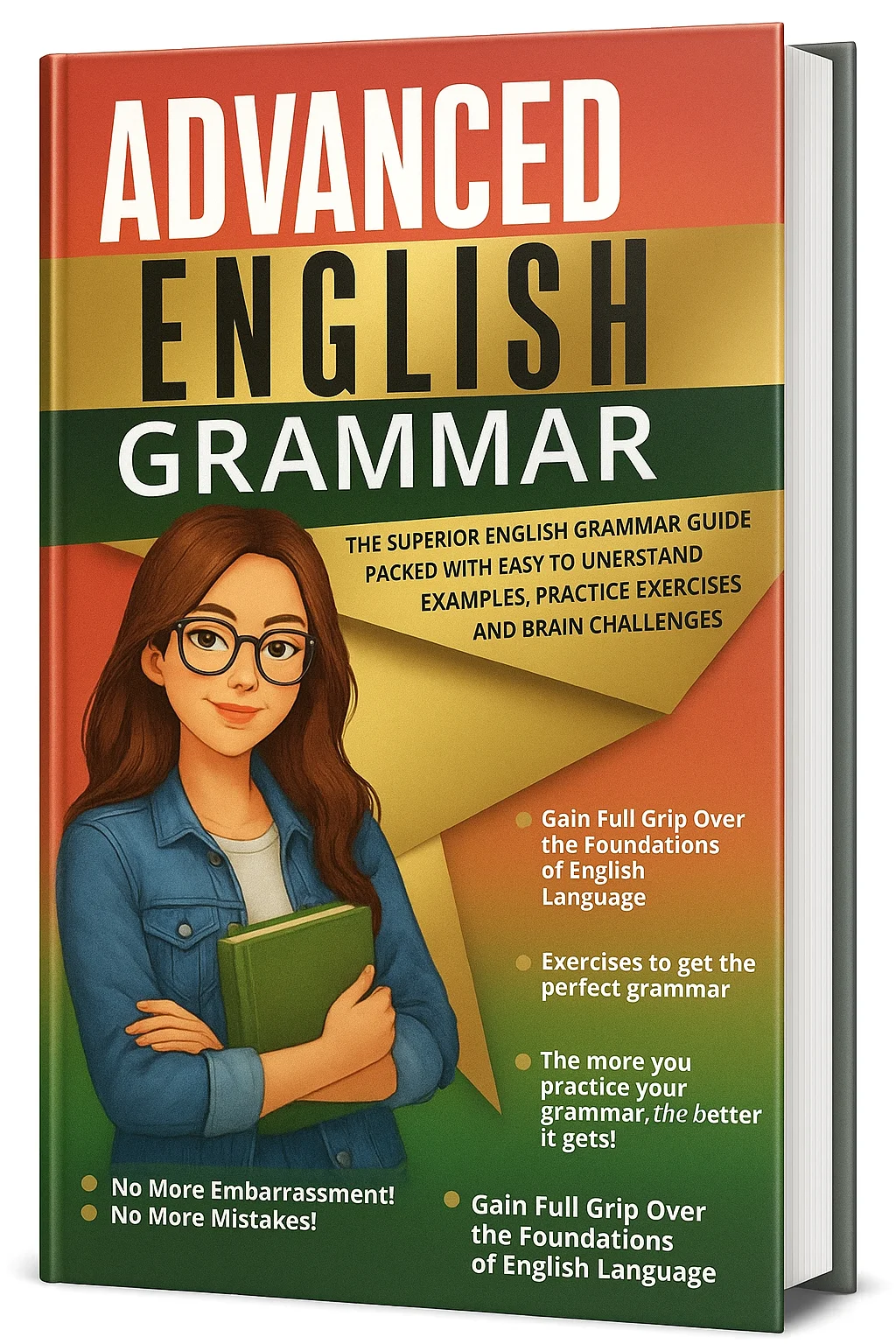
Advanced English Grammar2
Mastering the Nuance: Your Journey into Advanced English Grammar
You write a good email. Your reports are clear. People understand you. For many, this level of comfort with the English language is the final destination. But for you—the aspiring writer, the non-native speaker aiming for fluency, the professional whose credibility hinges on eloquence, or the curious linguist—”good enough” is just the beginning. You’ve sensed there’s a deeper layer to the language, a world of subtlety and precision that lies beyond the basics of subjects and verbs. This is the realm of Advanced English Grammar, and mastering it is the key to transforming your communication from simply correct to truly powerful.
So, what exactly separates intermediate grammar from its advanced counterpart? It’s not about learning entirely new rules, but rather understanding the elegant exceptions, the nuanced choices, and the sophisticated structures that give English its richness and flexibility. Think of it as the difference between following a recipe and becoming a master chef who knows precisely how a pinch of spice will transform a dish.
Beyond the Basics: The Hallmarks of Advanced Mastery
While basic grammar provides the essential blueprint for a sentence, advanced grammar furnishes the interior, adding style, tone, and impeccable clarity. A firm grasp of Advanced English Grammar involves navigating complex territories that often trip up even experienced writers.
1. The Subjunctive Mood: Mastering Hypotheticals
You might use it without even realizing it. The subjunctive mood expresses wishes, suggestions, and hypothetical situations. It’s the difference between “If he was here…” (which is common but technically describes a fact) and the more formally correct “If he were here…” (which describes a hypothetical or wish). Understanding these subtle shifts in verb form allows you to articulate complex, non-real scenarios with grammatical precision.
2. The Perfect Aspect and Verb Tenses: A Finer Control of Time
Most of us are comfortable with past, present, and future. But advanced grammar delves into the aspect of a verb—how an action unfolds over time. Consider the difference between the Past Perfect (“I had finished the work”) and the Simple Past (“I finished the work”). The Past Perfect explicitly tells your reader which of two past events happened first, creating a clearer timeline. Mastering these aspects, like the perfect and continuous forms, gives you surgical control over how you sequence events and ideas.
3. Inversion and Cleft Sentences: Stylistic Sophistication
Sometimes, you want to emphasize a particular part of a sentence for dramatic or rhetorical effect. This is where advanced structures come into play. Inversion flips the typical subject-verb order, as in “Not only did she complete the marathon, but she also broke a record.” Cleft sentences split a single idea into two clauses for focus: “It was her dedication that ultimately led to her success.” These are not just rules; they are tools for crafting more engaging and impactful prose.
4. The Finer Points of Modality
Basic grammar teaches you modal verbs like can, should, and must. Advanced grammar explores the subtle gradients of meaning between them. What’s the difference in obligation between “You must attend” and “You have to attend”? How does “I might join you” differ in certainty from “I could join you”? This nuanced understanding allows you to convey degrees of certainty, permission, and obligation with impeccable accuracy.
Why “Advanced English Grammar” is the Essential Guide
Navigating this complex landscape requires a guide that is both authoritative and accessible. A book titled Advanced English Grammar must be more than just a list of rules; it must be a mentor. It should anticipate the challenges you’ll face and provide clear, contextual explanations.
A high-quality guide to these concepts will distinguish itself by:
- Contextual Learning: It won’t just define the past perfect tense; it will show you, through numerous examples, exactly when and why to use it over the simple past to avoid ambiguity.
- Contrast and Comparison: The best way to understand a subtle grammatical point is to see it side-by-side with a more common alternative. A great book will constantly highlight these comparisons, making the “why” behind the rule crystal clear.
- Focus on Common Pitfalls: It will dedicate time to the errors that persistently appear in the work of otherwise proficient users—the dreaded dangling modifiers, the confusion between ‘which’ and ‘that,’ and the proper use of the semicolon versus the em-dash.
- Practical Application for Writing: Ultimately, the goal is to improve your written output. Exercises and examples should be geared towards real-world writing scenarios—crafting persuasive arguments, writing elegant narratives, and producing flawless professional documents.
Embarking on the study of Advanced English Grammar is a commitment to excellence. It is a decision to stop being a passive user of the language and to become an active architect of your own meaning. It’s the knowledge that lets you choose the perfect word, construct the most compelling sentence, and command the room—or the page—with unwavering confidence. This isn’t about being pedantic; it’s about unlocking the full, beautiful potential of the English language to ensure your ideas are not just heard, but felt, understood, and remembered.
Comments (0)